
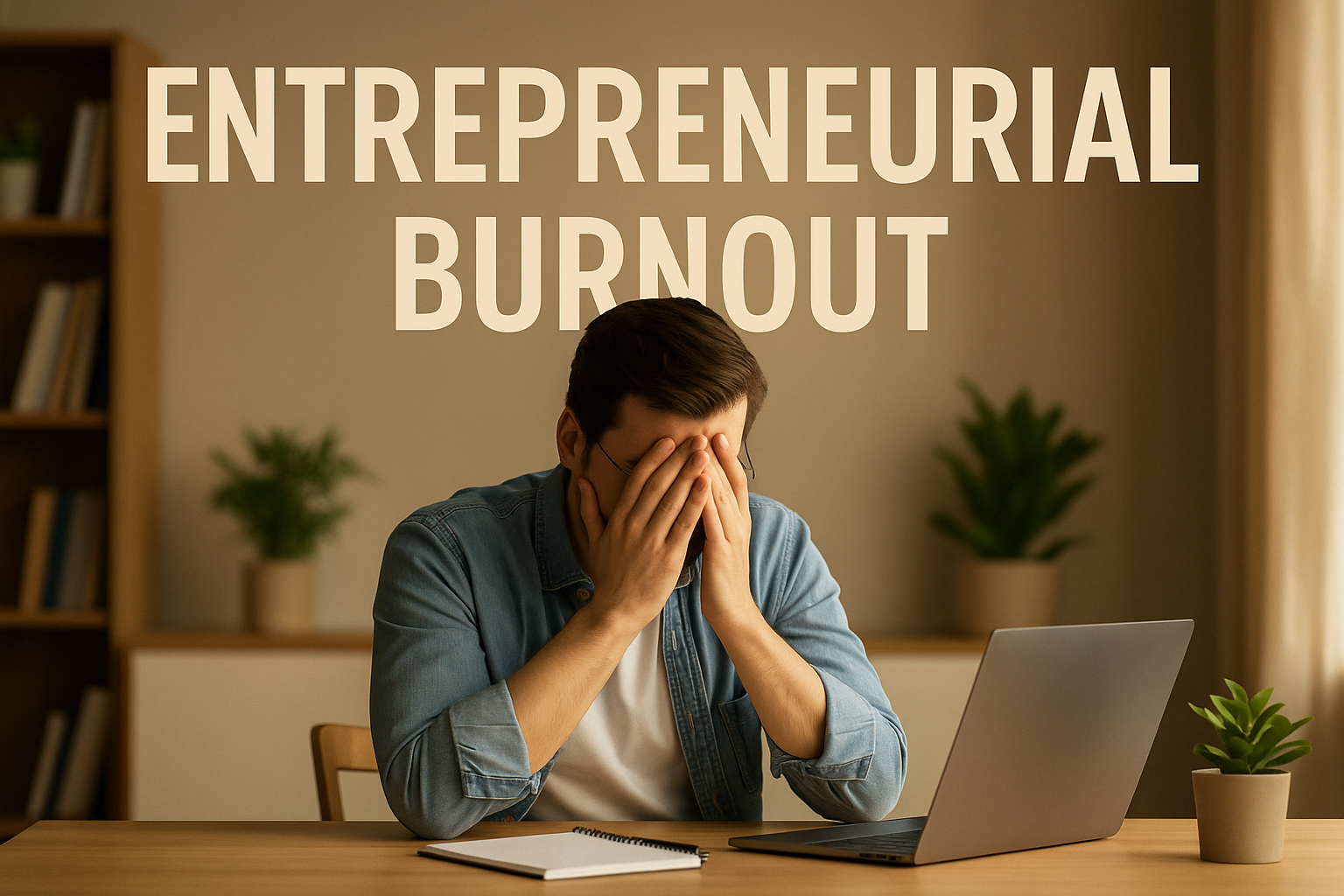
The modern entrepreneurial dream is compelling: transform your passion into a profession, build something from nothing, and live life on your own terms. It’s a seductive narrative, fueled by social media, where we see daily success stories of founders raising millions, launching apps, traveling the world, and working from beachfront cafés. But beneath the surface of this glamorized version of startup life lies a pervasive and often invisible crisis—burnout.
Burnout among entrepreneurs is more than just exhaustion. It’s a crisis of identity, a slow erosion of enthusiasm, clarity, and personal well-being. It’s what happens when the lines between work and self dissolve, and when passion—the very force that launched the journey—mutates into pressure. As startup culture cenetontinues to glorify relentless work, personal sacrifice, and 24/7 connectivity, entrepreneurial burnout is no longer an outlier. It’s becoming the norm.
The Illusion of Infinite Energy
Entrepreneurs are lionized for their drive and stamina. In a culture where working 80 hours a week is a badge of honor and scaling fast is a metric of worth, founders are expected to give more, be more, and achieve more. The narrative champions tenacity: sleeping less, grinding harder, and staying “always on.”
But this narrative ignores a fundamental truth: human energy is finite. The same traits that propel entrepreneurs forward—obsession, resilience, a hyper-focus on results—can also become dangerous when left unchecked. Founders live and breathe their ventures. They pitch at conferences, network at midnight, answer emails from hospital beds, and measure self-worth by performance.
In early-stage startups, that intensity may feel necessary. The adrenaline is real, the stakes are high, and the mission is urgent. But over time, this overdrive mode can become destructive. Chronic stress, sleep deprivation, and emotional suppression can compound into something much harder to recover from—complete mental and physical collapse.
Research underscores the problem: a study from UC Berkeley found that 72% of entrepreneurs report mental health issues, including anxiety and depression. Founders are twice as likely to suffer from depression than the general population. And those stats don’t even capture the silent struggles—the fear of failure, the loneliness of leadership, or the guilt of needing rest.
When Passion Turns Into Pressure
What starts as passion can quickly become pressure when your personal identity is tied to your startup’s success. When your business is also your brand, your income, your sense of purpose, and your reason to get out of bed—it can feel like there’s no separation between who you are and what you do.
That emotional entanglement is intensified by external expectations. Investors expect returns. Customers expect excellence. Employees expect vision. And founders expect themselves to never falter.
Add to this the crushing comparisons on social media—where every scroll reveals someone scaling faster, raising more, winning awards—and the psychological toll grows heavier. You’re not just building a business; you’re competing in an unspoken game of success theater.
In this environment, rest becomes guilt-inducing. Saying no feels like failure. And even small wins feel inadequate. The result? Quiet suffering masked by high-functioning performance.

Breaking the Hustle Myth
Startup lore is filled with stories of legendary hustle: the founder who coded 72 hours straight, the team that slept in the office for months, the product launched in a weekend that went viral. These stories are framed as triumphs.
But what’s often left out are the costs: the broken relationships, chronic anxiety, and disconnection from life outside of business. Founders often burn out not because they’re lazy or weak, but because they care too deeply and feel too responsible. The “hustle hero” archetype is not just outdated—it’s dangerous.
Burnout isn’t a sign of weakness. It’s a physiological and emotional signal that something is out of balance. It’s the body and mind sounding an alarm. And ignoring that alarm can lead to more than just fatigue—it can lead to long-term health damage, apathy, or even walking away from something you once loved.
The Quiet Signs of Burnout
Burnout rarely announces itself with drama. It’s more like a leak than a flood. It builds slowly and manifests differently for everyone. Some signs include:
- Feeling numb or disconnected from your work.
- Being perpetually anxious or irritable.
- Procrastinating even on tasks you used to enjoy.
- Isolating from your team, friends, or family.
- Waking up feeling tired, overwhelmed, or hopeless.
The real danger is that these symptoms are often normalized. In startup culture, they’re dismissed as “part of the grind.”
Recovery Is Reinvention
Recovering from entrepreneurial burnout isn’t about a two-week vacation or meditation app. It requires deeper shifts—mental, operational, and emotional. Some actionable paths to healing include:
- Creating clear boundaries: Define when work stops. Your startup can’t own your nights and weekends forever.
- Delegating with trust: Founders who hoard control compound their stress. Empower your team.
- Decoupling self-worth from metrics: Your ARR doesn’t define your value as a person.
- Investing in non-work relationships: Real friendships are essential ballast in entrepreneurial life.
- Seeking mental health support: Coaching, therapy, or peer support groups are lifelines, not luxuries.
More founders are openly discussing burnout—and in doing so, they’re deconstructing the stigma. Vulnerability isn’t weakness. It’s leadership.
A Healthier Definition of Success
What if success wasn’t just defined by scale, revenue, or exits—but also by sustainability, well-being, and joy? What if you could grow without grinding yourself into dust?
The most resilient businesses aren’t built on exhaustion. They’re built on alignment—between values, vision, and energy. A new generation of founders is embracing that philosophy. They’re launching purpose-driven companies, embracing slow growth, and building systems that support both scale and sanity.
They understand that your business can’t be healthy if you aren’t.
Burnout is not a failure. It’s a feedback mechanism. It tells you that something in your operating model—whether personal or professional—needs to evolve.
Entrepreneurs who recognize and respond to burnout don’t just recover—they reinvent. They build with better boundaries. They lead with empathy. They create cultures where people—and founders—can thrive.
Because in the end, the true measure of success isn’t just a company that scales.
It’s a life that feels whole while building it.