
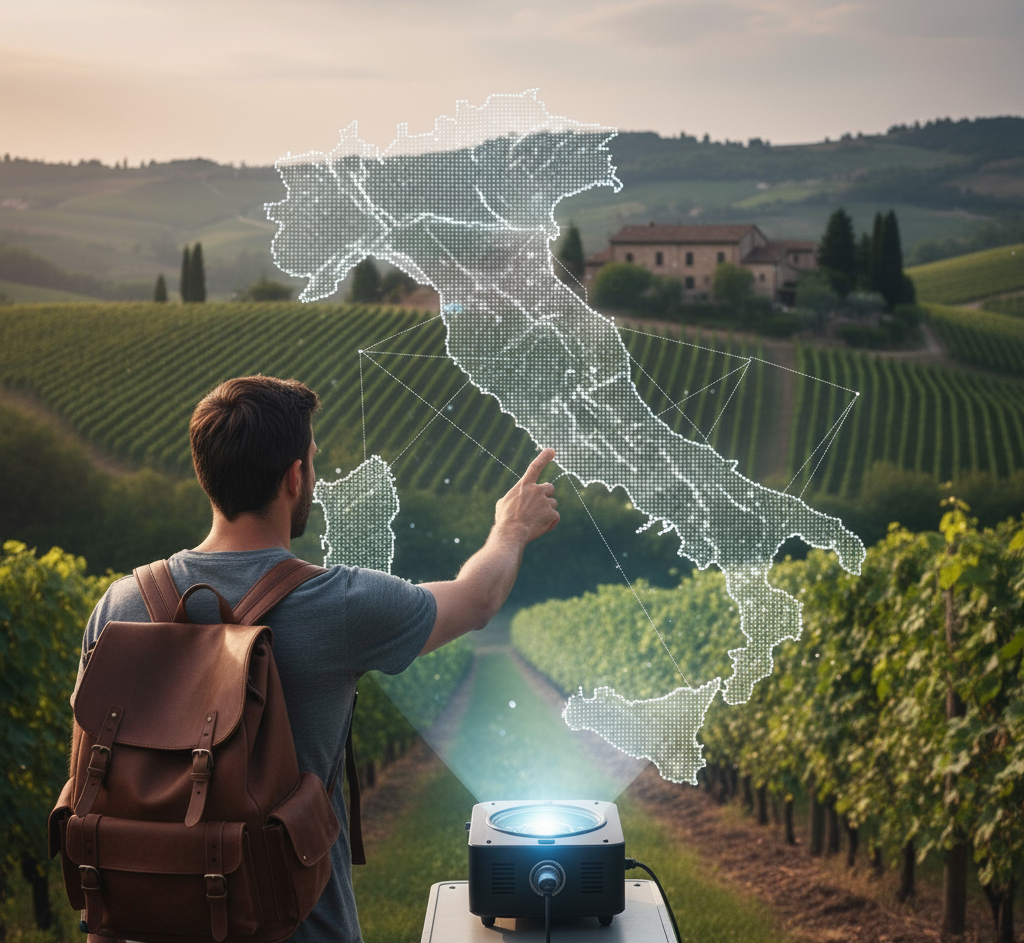
Travel planning. For some, the words evoke a joyful anticipation of adventure. For most of us, they trigger a phantom stress—the memory of a dozen open browser tabs, a sprawling spreadsheet, and the gnawing “analysis paralysis” that comes from scrolling through hundreds of hotel reviews. We spend hours, even days, trying to stitch together the perfect trip from a chaotic mess of information.
But a new generation of technology promises to end this frustration. AI-powered travel assistants are here, claiming they can act as your personal, all-knowing travel agent. They say they can understand your desires, process millions of data points in seconds, and craft a bespoke itinerary just for you.
Does the reality live up to the hype? We decided to find out. We put the new wave of AI to the test against traditional methods with a challenging, real-world travel brief. Is it time to fire your travel agent, and even yourself, from the job of trip planning?
The Test: Crafting the Perfect Tuscany Escape
To create a fair and challenging test, we devised a specific brief that requires more than just booking the most popular tourist spots.
- Destination: A 10-day trip through Tuscany, Italy.
- Focus: Avoid the main crowds of Florence and Siena. Discover “off-the-beaten-path” villages, authentic food experiences (like a local cooking class or a small winery tour), and historical depth.
- Budget: €2,500 per person, excluding international flights.
- Pace: A mix of exploration and relaxation—not a frantic race from one town to the next.
Meet the Contenders
We pitted three distinct planning methods against each other:
- Aether Travel (The AI Assistant): Our name for a composite of the latest AI travel platforms. These services use natural language processing. You simply tell them what you want, and they generate a full day-by-day itinerary with booking links for accommodation, activities, and transport.
- The DIY Digital Method (The Human & The Algorithm): This is the status quo for most travelers. A manual process involving a combination of Google Flights, Booking.com, TripAdvisor, popular travel blogs, and Google Maps to piece everything together.
- The Human Touch (The Bespoke Researcher): Our writer, acting as a dedicated travel planner, using deep research, insider blogs, and a human understanding of flow and narrative to craft the “perfect” itinerary from scratch.
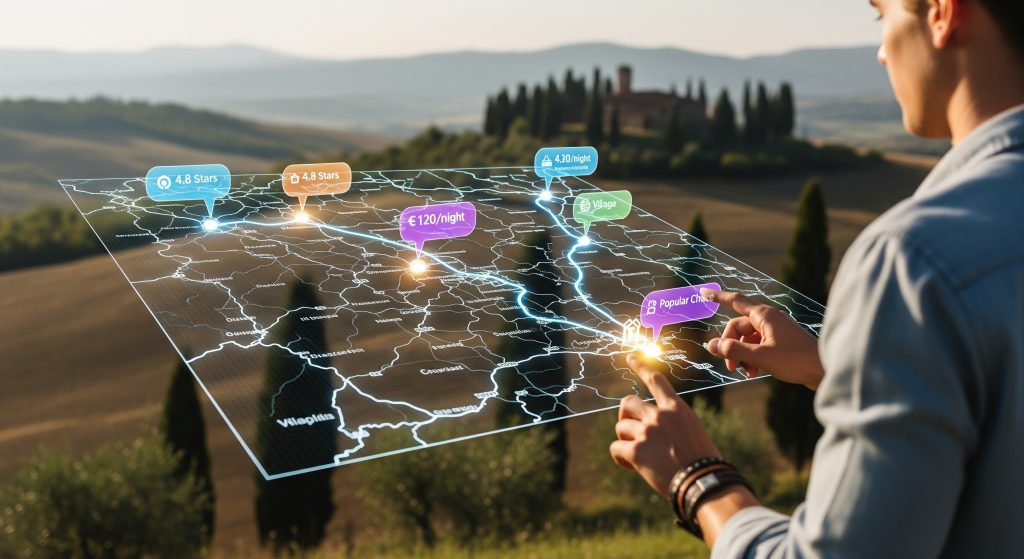
The Planning Process: A Head-to-Head Comparison
Aether Travel (The AI):
The experience was incredibly fast. We fed our detailed brief into the prompt. Within about 90 seconds, it produced a complete 10-day plan. It understood the “off-the-beaten-path” instruction, suggesting towns like Pienza, Montepulciano, and the thermal baths of Bagno Vignoni. It even found a highly-rated cooking class on a farm stay (agriturismo). The process felt seamless, almost magical.
The DIY Digital Method:
This was, predictably, a slog. The first three hours were spent just trying to map a logical route between towns, cross-referencing accommodation prices, and falling down the rabbit hole of TripAdvisor reviews. “This place has amazing views but bad breakfast.” “This one is charming but the parking is a nightmare.” It was a classic case of information overload, leading to frustration and indecision.
The Human Touch:
This process was the most enjoyable but also the most time-consuming. It involved hours of reading articles from slow-travel bloggers, finding local food guides, and discovering a truly hidden gem—the tiny, beautiful village of Sovana—that didn’t appear in the AI’s initial recommendations. The human planner could build a narrative, ensuring one day’s wine tasting complemented the next day’s historical tour.
The Itineraries: Analyzing the Results
This is where the differences became clear. We evaluated each plan on three key criteria.
1. Creativity & Authenticity:
- The AI: Scored surprisingly well. It successfully avoided the biggest tourist traps and found genuinely great options. However, its recommendations felt… predictable. They were the “best of the rest”—the most highly-rated options just below the main tourist tier. It recommended the most famous winery in Montepulciano, not the small, family-run one.
- The DIY Method: The result here was a Frankenstein’s monster of an itinerary—a mix of top-rated tourist spots and a few random choices based on booking.com availability. It lacked a coherent theme.
- The Human: This is where the human touch excelled. The itinerary included a visit to a lesser-known sculpture garden, a reservation at a restaurant favored by locals, and a driving route through the scenic Val d’Orcia timed for golden hour. It captured the feeling of a place, not just its data points.
2. Logic & Efficiency:
- The AI: Flawless. The route was perfectly optimized to minimize driving time. It logically grouped activities by location and even factored in typical opening times for museums and wineries. It was a masterclass in logistics.
- The DIY Method: A disaster. The manually planned route involved significant backtracking, underestimating travel times between hilltop towns.
- The Human: Very good, but not perfect. The human planner prioritized experience over pure efficiency, allowing for a slightly longer drive one day to accommodate a special lunch spot.
3. Budget Adherence:
- The AI: Came in exactly on budget, finding a mix of accommodation that perfectly averaged out to the target price.
- The DIY Method: Went slightly over budget due to choosing popular, highly-rated hotels that commanded higher prices.
- The Human: Came in slightly under budget by finding a charming but less-known agriturismo that offered better value than the algorithmically-surfaced options.
The Verdict: Is It Time to Fire Yourself as a Travel Planner?
So, can an AI plan your next trip? The answer is a resounding yes, but with a caveat.
The AI travel assistant was phenomenal at creating a highly logical, well-budgeted, and very good “first draft” of a trip in seconds. It eliminated 90% of the logistical heavy lifting and frustrating research. For travelers who want a solid, reliable plan without spending hours on details, it is a revolutionary tool.
However, it still lacks the human ability for true discovery and nuance. It can’t capture the “vibe” of a place or uncover that truly special, hidden gem that isn’t yet widely reviewed online. It gives you an A-minus trip, but the A-plus details still require a human touch.
The future of travel planning isn’t AI vs. Human. It’s AI + Human. The ultimate workflow will be to use an AI assistant to generate a robust, logistically sound itinerary in minutes. Then, the human traveler can use their saved time and energy to do the fun part: refining the plan, swapping out a generic choice for a local secret, and adding the personal touches that transform a good trip into an unforgettable one.
AI is poised to become the indispensable co-pilot for the modern traveler, freeing us from the tyranny of the planning spreadsheet and giving us back our most precious resource: the time to simply dream about the journey ahead.