
If you ask a typical executive to name the most innovative industry on the planet, you’ll likely hear “AI,” “biotech,” or “fintech.” Few, if any, would say “video games.” For many leaders, gaming still conjures images of a niche hobby for teenagers in basements.
This perception is not just outdated; it’s a strategic blind spot.
The global gaming market is now larger than the film and music industries combined, generating well over $200 billion annually. But its true significance isn’t its size; it’s the fact that it has become a live-action laboratory for the most advanced business models on the planet. While other industries talk about engagement, community, and recurring revenue, the gaming industry has perfected them.
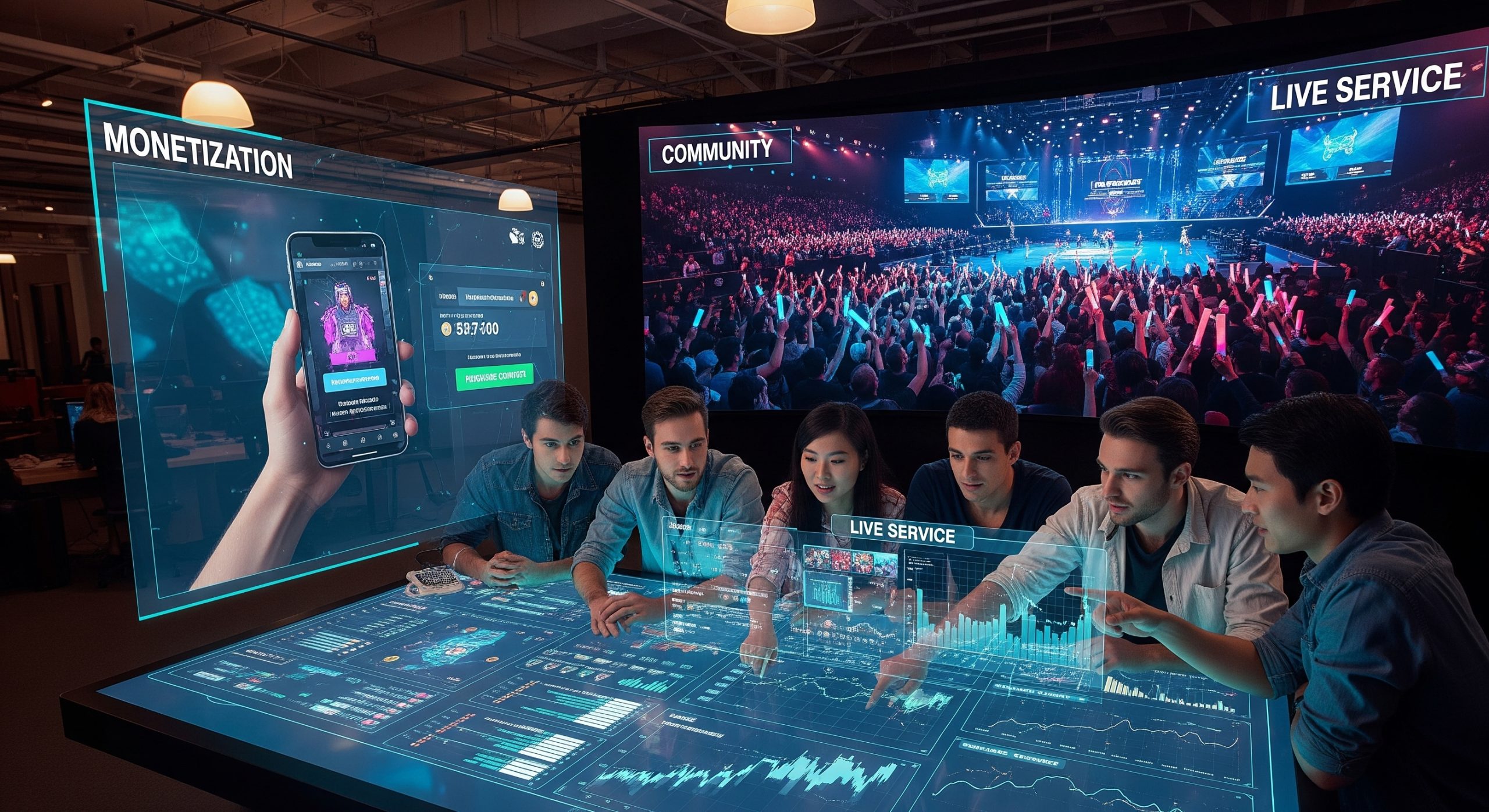
Dismissing gaming as mere entertainment is a mistake. It is a masterclass in modern business strategy, and leaders who ignore its lessons do so at their own peril. Here are three of its most powerful innovations that every industry should be studying right now.
Lesson 1: The ‘Live Service’ Model – Your Product Is Never Finished
For decades, the dominant business model was to “fire and forget.” You design a product, you launch it, you market it, and then you move on to developing the sequel. This was true for software, cars, and, for a long time, video games.
The modern gaming industry has shattered this model with the concept of “Games as a Service” (GaaS).
Look at titles like Fortnite, Apex Legends, or Valorant. The game you download today is radically different from the one that existed a year ago, and it will be different again a year from now. The product is not a static object; it is a living, evolving platform. These games often launch for free to build a massive user base, then retain that audience through a continuous stream of new content:
- Seasons: Themed periods lasting a few months that introduce new storylines, challenges, and rewards.
- Live Events: In-game concerts (like Travis Scott’s in Fortnite), limited-time modes, and narrative events that get the whole community talking.
- Constant Updates: Regular patches that not only fix bugs but add new characters, features, and balance changes based on player feedback.
The Transferable Business Lesson: Treat your product as a service, not a one-time sale. Instead of focusing all your energy on big, infrequent launches, create a roadmap for continuous, iterative improvement. This keeps your customers perpetually engaged, reduces churn, and transforms a transactional relationship into a long-term subscription to your brand’s evolution. Think of Tesla’s over-the-air updates that add features to a car long after it’s been purchased, or Adobe’s shift to the Creative Cloud model. They learned from gaming: a product that never stops improving is a product that customers never want to leave.
Lesson 2: Community as the Moat – Building a Tribe, Not Just a Customer Base
Every company wants a “loyal community,” but few understand how to build one as effectively as the gaming industry. Game developers know that their most powerful asset isn’t their intellectual property; it’s the tribe of players that forms around it.
They build this “community moat” with a multi-layered approach:
- The Game as a Social Hub: Modern games are social networks in their own right. They are designed to be experienced with friends, not just next to them.
- Embracing Third-Party Platforms: They don’t try to keep the conversation locked in their own ecosystem. They actively foster communities on Discord (for organization), Twitch (for performance and spectating), and Reddit (for discussion and lore). They go where the players are.
- Empowering User-Generated Content: The smartest developers provide the tools for players to become co-creators. From Minecraft worlds to Roblox games, players are building, sharing, and creating their own stories within the game’s universe. The company provides the stage; the community writes the play.
The Transferable Business Lesson: Stop talking at your customers and start building platforms for them to talk to each other. A strong community is your most durable competitive advantage. It generates powerful organic marketing, provides an invaluable real-time feedback loop, and creates an emotional bond that a competitor’s new feature or lower price can’t easily break. Look at LEGO Ideas, which allows fans to design and vote on new sets, or CrossFit, which built a global fitness empire around its community-centric gym model.

Lesson 3: The Psychology of Monetization – Beyond the One-Time Sale
The gaming industry, particularly with the Free-to-Play (F2P) model, has mastered the art of generating revenue without alienating its user base. It has done so by shifting its focus from selling access to selling identity, status, and convenience.
- The Battle Pass: Instead of a mandatory subscription, a “battle pass” is a low-cost, optional purchase for a specific season. It doesn’t give players a competitive advantage; it gives them a clear progression path and rewards their engagement with exclusive cosmetic items. It turns playing the game into a rewarding, goal-oriented activity.
- Cosmetic Microtransactions: The core of F2P revenue. These are purely aesthetic items—”skins” for characters, unique animations, or custom banners. They allow players to express their individuality and signal their dedication without creating a “pay-to-win” environment that would frustrate the non-paying majority.
- Intelligent Scarcity: Digital item shops often feature daily or weekly rotations of items. This use of artificial scarcity creates excitement and a “fear of missing out” that encourages repeat visits and impulse purchases in a way that a static catalog cannot.
The Transferable Business Lesson: The future of revenue is flexibility. Offer a valuable core product for free to maximize your reach. Then, allow your most engaged users to spend money on premium offerings that enhance their experience, showcase their identity, or save them time. Think of Spotify’s freemium model, Duolingo’s subscription to remove ads, or a SaaS tool that offers a free tier with powerful paid add-ons. They monetize engagement, not just entry.
Conclusion: It’s Time to Start Playing
The gaming industry is not a crystal ball, but it’s the closest thing we have to a real-time simulation of the future of digital business. The strategies it is perfecting today in virtual worlds will be the standard operating procedures in boardrooms tomorrow.
Leaders who continue to dismiss this industry are choosing to ignore a masterclass in product development, community marketing, and revenue strategy. It’s time to look past the stereotypes and analyze the systems. Ask yourself: How can you turn your product into a live service? Your customers into a community? And your one-time sale into a meaningful long-term relationship? The answers could unlock your company’s next level.