
Of course. Here is a full-length article based on the title you selected, exploring the complex and fascinating world of
Before their first sip of coffee, today’s health optimizer has already analyzed their sleep stages, checked their overnight Heart Rate Variability, and noted their blood oxygen levels. A sensor on their arm has tracked their blood glucose response to last night’s dinner, revealing a spike at 10 PM. The data is clear: the late-night snack was a mistake, and today’s workout should be light intensity to aid recovery.
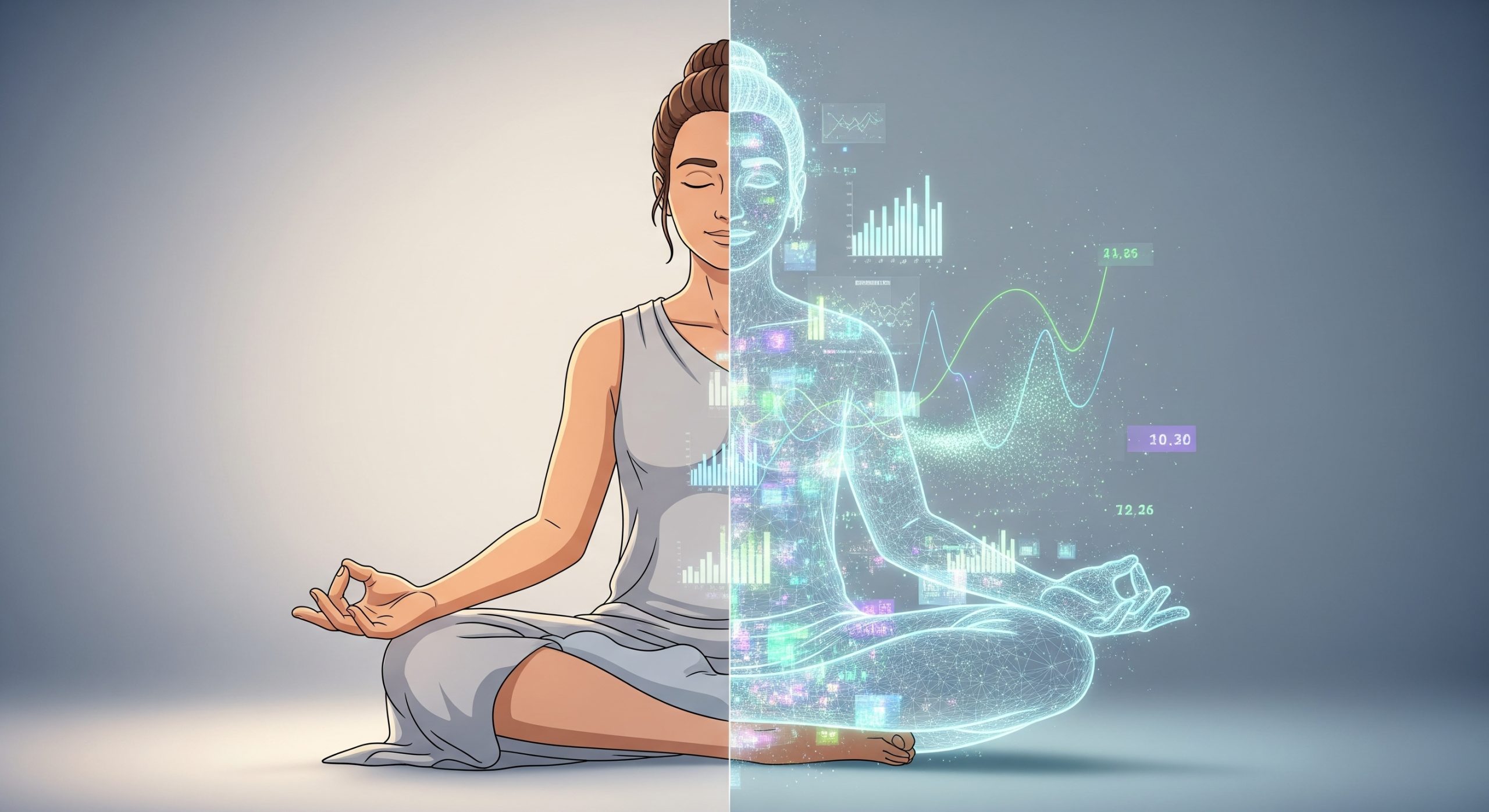
This is the world of the “Quantified Self” and its proactive evolution, “biohacking.” It’s the application of engineering principles to our own biology, a movement built on the radical promise that by tracking everything, we can optimize anything. Armed with wearable sensors, continuous monitors, and at-home blood tests, a new generation is turning their bodies into data-rich systems, seeking to unlock peak performance and longevity.
On one hand, this represents a revolutionary shift from reactive to proactive healthcare, giving us unprecedented agency over our own wellbeing. On the other, it risks turning life itself into a relentless optimization problem, trapping us in a cycle of data-obsession and anxiety. So where is the truth? Is this the future of health, or just a new, technologically advanced way to worry?
The Promise: The Body as a Data-Rich System
For most of history, medicine has been a reactive practice. We wait for symptoms to appear, then we seek a diagnosis and a cure. The Quantified Self movement flips this script entirely. It aims to create a baseline of personal health data so granular that it can detect subtle deviations long before they become symptoms, allowing for early and personalized interventions.
This proactive approach is powered by an ever-growing arsenal of consumer technology:
- Advanced Wearables (Oura Ring, Whoop): Moving far beyond simple step counting, these devices track sleep quality, recovery scores, body temperature, and Heart Rate Variability (HRV)—a key indicator of the body’s stress and readiness levels. They promise to tell you not just how much you slept, but how well you recovered.
- Continuous Glucose Monitors (CGMs): Once a tool exclusively for diabetics, CGMs are now used by wellness enthusiasts to get a real-time view of their metabolic health. By seeing exactly how a meal, a workout, or a stressful meeting affects their blood sugar, users can run personal experiments to fine-tune their diet.
- Personalized Analytics (InsideTracker, Viome): These services analyze your blood and DNA to provide hyper-personalized recommendations for diet, supplements, and lifestyle changes, promising a roadmap to optimization based on your unique biology.
The collective promise of these tools is empowerment. They offer the ability to move beyond generic health advice (“eat less, move more”) and conduct N-of-1 experiments. How does eating pasta for dinner really affect my sleep? Does meditating for 10 minutes actually lower my stress markers? For the first time, we can get objective data to answer these questions for ourselves.
The Peril: The Anxious Pursuit of Perfection
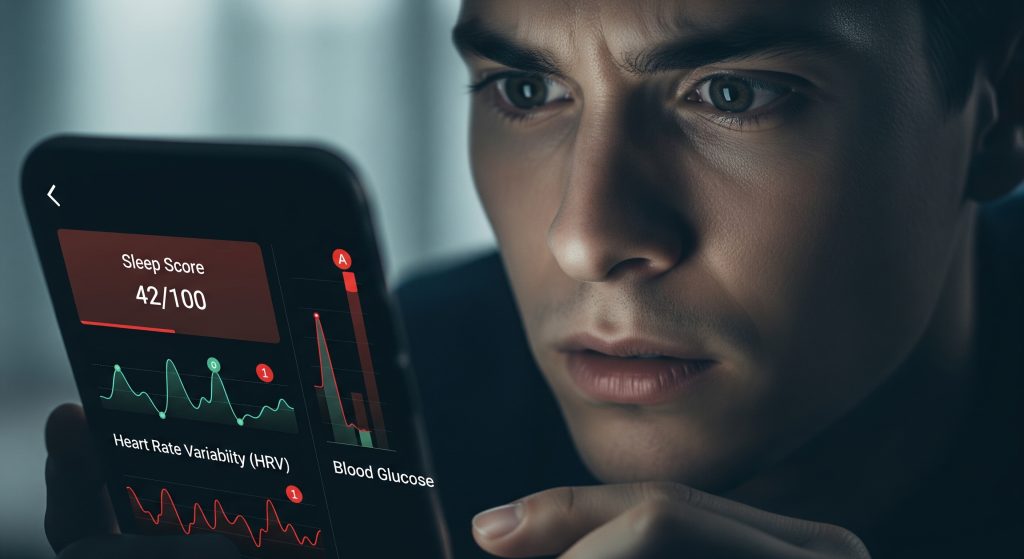
While the promise is alluring, the reality for many is a descent into a new kind of digital disorder. The constant stream of data, meant to empower, can quickly become a source of overwhelming anxiety.
1. The Rise of “Orthosomnia”
Coined by sleep researchers, “orthosomnia” describes an unhealthy obsession with achieving perfect sleep scores. The irony is brutal: users lie in bed, stressed about their wearable not registering enough “deep sleep,” which in turn causes more stress and worse sleep. The tool designed to improve sleep ends up destroying it.
2. Data Overload and Health Anxiety
Our bodies are not static machines; they are dynamic systems that fluctuate constantly. When every minor dip in HRV or slight rise in blood sugar is presented on a graph, it’s easy to misinterpret normal biological variance as a sign that something is wrong. A “bad” recovery score can cast a shadow over an entire day, creating a negative feedback loop where the fear of underperforming leads to exactly that. This hyper-vigilance can turn an interest in wellness into a full-blown health anxiety disorder.
3. The Risk of Misinterpretation
It’s crucial to remember that most of these products are consumer-grade wellness devices, not medical-grade diagnostic tools. Without the context and expertise of a medical professional, users can easily draw the wrong conclusions from their data. This can lead to unnecessary dietary restrictions, self-prescribing expensive supplements, or immense stress over a data point that a doctor would deem insignificant.
4. The Wellness Divide
Furthermore, this level of self-optimization is expensive. With smart rings costing hundreds of dollars and personalized analytics services running into the thousands, biohacking risks creating a new form of “wellness inequality,” where only the affluent can afford the tools to meticulously manage their health, further widening the gap between the haves and the have-nots.
Finding the Balance: From Data Points to Wisdom
So, how do we harness the power of this technology without falling prey to its psychological traps? The solution lies in shifting our mindset.
The healthy approach is to treat data as a guide, not a guru. The numbers on your screen are clues, not commandments. They should be a starting point for curiosity, not a final judgment on your health. The goal is to integrate this new data with our oldest and most reliable sensor: our own body. The feeling of being energetic, tired, hungry, or clear-headed is a data point of immense value that no wearable can fully capture.
The ultimate goal of self-tracking should be to eventually not need it as much—to use the data to cultivate a deeper, more intuitive understanding of our own body’s signals. It’s about turning information into embodied wisdom.
Conclusion: The Future is Wise, Not Just Quantified
Is biohacking the future or a new form of anxiety? The answer is that it is a powerful tool with the potential to be either. Its value is determined not by the technology itself, but by the wisdom with which we apply it.
If used as a rigid scorecard for self-worth, the Quantified Self becomes a prison of data. But if used as a compass for curious self-exploration, it can be a liberating force, helping us build a more personalized and proactive relationship with our own health.
The next evolution of this movement won’t be about more data, more trackers, or more graphs. It will be about creating technology that helps us listen to our bodies again, not just measure them. The true “hack,” it turns out, is not in optimizing our metrics, but in optimizing our self-awareness.