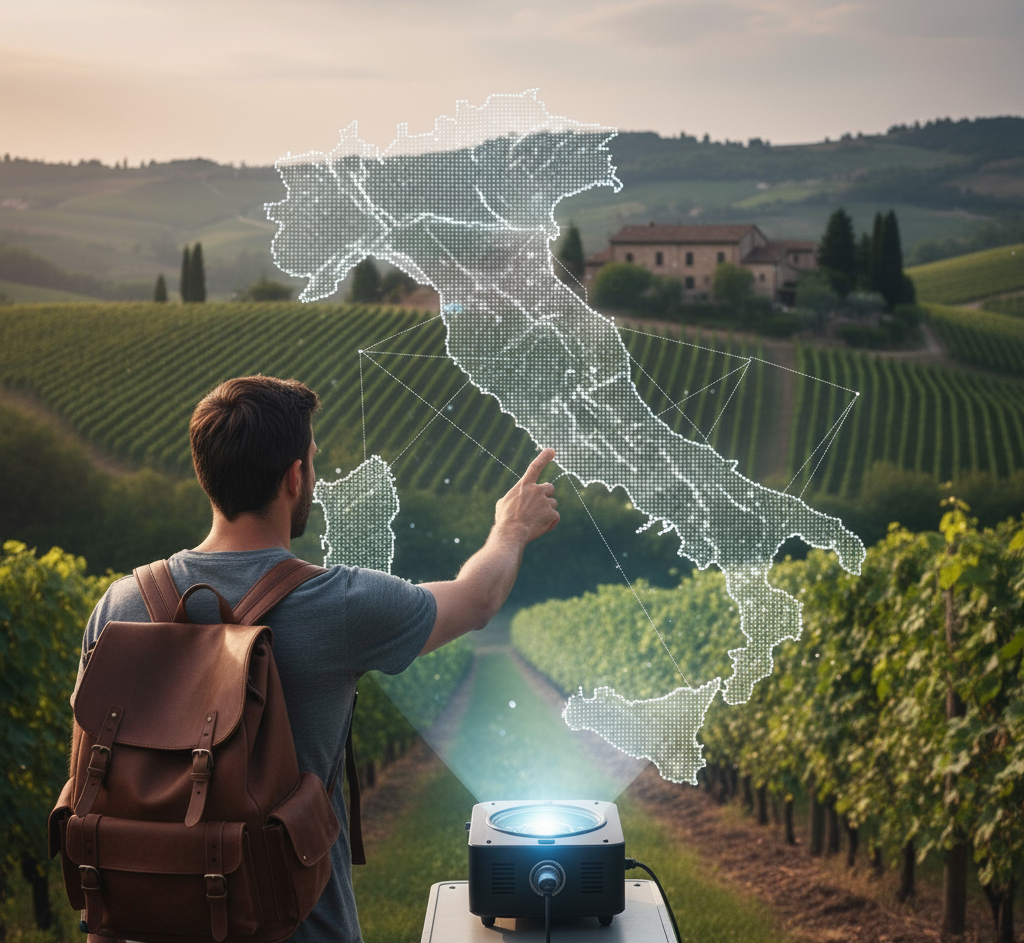

In the contemporary landscape of relentless connectivity, the very essence of travel has been profoundly distorted. It has, for many, ceased to be a genuine act of exploration and self-discovery, transforming instead into a high-stakes, competitive performance for remote digital consumption. We compulsively record, stream, and scroll, treating authentic local culture as little more than aesthetically pleasing background fodder for our fleeting social output. This behavioral pattern constitutes a critical ethical failure: we willingly relinquish our cognitive sovereignty and our capacity for genuine human connection in exchange for the addictive, but ultimately empty, currency of digital validation.
The philosophy of Digital Silence Abroad is not merely a suggestion for a temporary detox; it is a rigorous, conscious commitment to recalibrate the traveler’s attention. It insists that we cease treating our devices as tools for passive consumption and instead harness them strictly as production instruments—for purposeful research, reflective journaling, and deliberate creation. This ethical framework is essential to ensure that the finite, precious resource of time spent traveling yields maximum personal and intellectual return.
I. The Ethical Accounting: Calculating the Cost of Lost Presence
The core of Digital Silence lies in recognizing the moral expense of consuming a place through a screen. When the phone acts as an intermediary, it doesn’t merely record the experience; it replaces it, triggering a cognitive shift from receptive engagement to anxious performance.
The Empathy Deficit in Foreign Fields
This chronic cognitive flickering, driven by the urge to document and share, is the engine of the Empathy Deficit. The traveler’s mind is never anchored in the present moment; it is perpetually cycling between the location and its digital representation (Is the lighting good? Will this frame look good on the feed?). Consequently, the deepest layers of cultural experience—the non-visual, the non-verbal, the ephemeral atmosphere—are filtered out. The nuanced interactions with locals, the specific smell of a market, the subtle rhythm of daily life that defines a foreign place, are lost. By prioritizing the remote audience’s consumption over the integrity of one’s own immediate experience, the traveler devalues the reality they came to seek.
The Erosion of Cognitive Capital
Furthermore, every minute spent doom-scrolling on a foreign train or checking notifications in a historic square is a minute stolen from dedicated reflection and analysis. Travel is one of the most powerful catalysts for intellectual production, but only if the mind is afforded the necessary quietude to process new data. Consuming low-quality, high-volume digital content saturates the mind with noise, leaving no available cognitive capital for the complex, high-friction work of forming original insights or weaving new experiences into one’s existing worldview. The failure to be fully present is, therefore, a failure of intellectual responsibility.
II. Reclaiming the Digital Tool: Redefining the Smartphone as a Production Instrument
To successfully implement Digital Silence Abroad, the electronic device must be subjected to a categorical and functional reclassification. It is no longer an all-purpose recreational device, but a specialized instrument for output.
The Strict Digital Production Protocol
- Strict Time Batching for Digital Output: The most destructive habit is real-time sharing. Establish a single, non-negotiable 30- to 45-minute block each day—ideally late in the evening—dedicated exclusively to digital processing. During this time, you organize photos, write factual captions, send necessary messages, and address all collected data. By confining digital work, the remaining 95% of the day is designated for uninterrupted experience and input absorption.
- The Muted Lens Discipline: When using the camera function, intentionally practice The Muted Lens Rule. Take the photograph and immediately place the phone back into a pocket or bag. Do not check the shot, do not look at notifications, and do not perform any digital review until the designated batching time. This is a severe form of digital fasting that trains the brain to trust the eye and the immediate experience, divorcing the act of memory-making from the instant gratification of viewing.
- Aggressive App Zoning and Purging: Prior to the trip, perform a surgical removal of all passive consumption and distraction apps (social media feeds, video platforms, non-essential news aggregators). The home screen should host only tools that facilitate production and necessity (Notes, Camera, Maps, Translator, Local Transport Apps). This ensures that when the device is opened, the user is channeled toward an action of contribution or utility, never dissipation.
- Analog Capture Priority: Prioritize analog tools for immediate data capture. Carry a small notebook for quick observations and a compact paper map. The physical act of writing or mapping requires higher cognitive engagement than typing and creates a friction of input that immediately elevates the quality of the recorded experience.

III. Deep Listening and Active Observation: The Creation of Internal Knowledge
The most valuable form of production during travel is the generation of unique, high-quality data within the mind—the raw material for essays, analyses, and meaningful reflections. This requires a dedicated commitment to deep cultural listening.
The Methodology of the Intentional Observer
- The Unscheduled Hour and Boredom Protocol: Intentionally schedule vast periods of unstructured time with no agenda. Reject the tourist impulse to fill every minute. It is in the “boredom,” the waiting, and the passive presence at a cafe or a park that the mind is freed from tactical planning and begins the complex, non-linear work of processing. This quietude is the necessary precursor to profound insight and original thought.
- High-Friction Interactions: Bypass standard, transactional tourist conversations. Seek out scenarios that demand deep engagement: an interview with a local artisan, attending a non-translated lecture, or spending hours observing a specific cultural ritual. Your mission is to produce complex questions and listen actively to generate cultural insights that cannot be extracted from a guidebook or a digital search. This active engagement reclaims the fundamental human dimension of travel.
- The Sensory Presence Log: Formalize the daily “Presence Log” as a required output. This log must be a detailed, prose-based account of the day, focusing explicitly on the five senses and elements not captured photographically (e.g., the specific scent of rain on the pavement, the tonal quality of a street vendor’s voice, the texture of a building). This demanding exercise forces the memory to actively produce a rich, complex narrative rather than defaulting to passive visual recollection.
- Local Media Consumption as Research: If media consumption is required, restrict it entirely to local, high-friction formats. Read a physical local newspaper, attempt to follow a television program in the local language, or purchase a book by a regional author. This intentional consumption serves the purpose of cultural understanding (the production of knowledge), not personal dissipation.
IV. The Copyeditor’s Snip: Ruthlessly Pruning Distractive Commitments
Just as an editor rejects a poorly sourced article, the intentional traveler must ruthlessly edit out all external commitments and internal habits that compete with the core mission of absorbing and producing insight. This is the art of strategic self-denial.
Principles of Self-Curatorial Pruning
- Zero Tolerance for Cross-Platform Syncing: Break the digital feedback loops that follow you across borders. Do not automatically sync your work email, domestic news feeds, or habitual social apps onto foreign devices or networks. The trip is a clean slate for attention; do not import the digital clutter you are attempting to escape.
- The Strategic “No” to Digital Maintenance: Recognize that maintaining a constant, detailed digital presence for remote stakeholders (friends, family, colleagues) is a form of passive commitment that drains immediate energy. Reserve updates for a single weekly summary, using the strategic “No” to protect the vast blocks of time required for deep work and cultural immersion.
- The Anti-Binge Covenant: Make a firm, pre-determined commitment to abstain from all forms of passive entertainment (binge-watching, sustained gaming, or hours of YouTube content) regardless of airport delays or downtime. This digital fasting ensures that the energy freed from routine is reinvested entirely in observation, reflection, or creative output. An empty hotel room should be seen as a perfect, silent studio, not a media consumption lounge.
- Financial Alignment with Production: Apply an ethical scrutiny to travel spending. Analyze the budget: how much is dedicated to quick, passive consumption (expensive tourist traps, luxury goods, high-cost, low-value experiences) versus investments in production (a language class, a local craft workshop, high-quality writing tools, entry to research archives)? The spending must align with the mission of active contribution.
V. The Production Deadline: Processing Experience into Enduring Value
The ethical arc of the journey is not complete upon landing home. The ultimate phase of Digital Silence Abroad is the transformation of notes, memories, and sensory data into a finished, high-quality product. This ensures the experience results in enduring value rather than simply a stack of photos.
The Post-Trip Production Mandate
- The 72-Hour Processing Window: Commit to allocating a significant block of time within the first 72 hours of returning home to process all notes and data. This critical window prevents the return to routine from instantly dissolving the insights gained. Use this time to categorize notes, transcribe key observations, and outline the major creative output (e.g., the essay, the long-form analysis, the short story).
- The P > C Rule for Legacy: Apply the Rule of Production Over Consumption (P > C) to your travel legacy. For every hour spent consuming old travel photos or passively reminiscing, commit two hours to the active creation of a final output. This could be writing a detailed travelogue, coding a data visualization of the trip’s route, or physically binding your field notes. This mandate elevates the experience from mere consumption to a tangible asset.
- Integrating the Insight: The most profound output is the integration of the cultural insights into one’s personal and professional life. This requires sustained reflection on how the observed culture challenges one’s native assumptions about work, time, and relationships. Use the travel insights to produce a shift in behavior or belief, making the journey an agent of lasting self-development.
To journey under the banner of Digital Silence is to make the courageous, deeply modern decision to treat one’s attention as a sacred, non-renewable resource. By applying journalistic rigor to the input stream, we guarantee that the time and expense of travel yield a truly valuable, original, and uniquely personal return. The greatest story a traveler can publish is not on a social media feed, but in the depth and wisdom of their re-curated self.