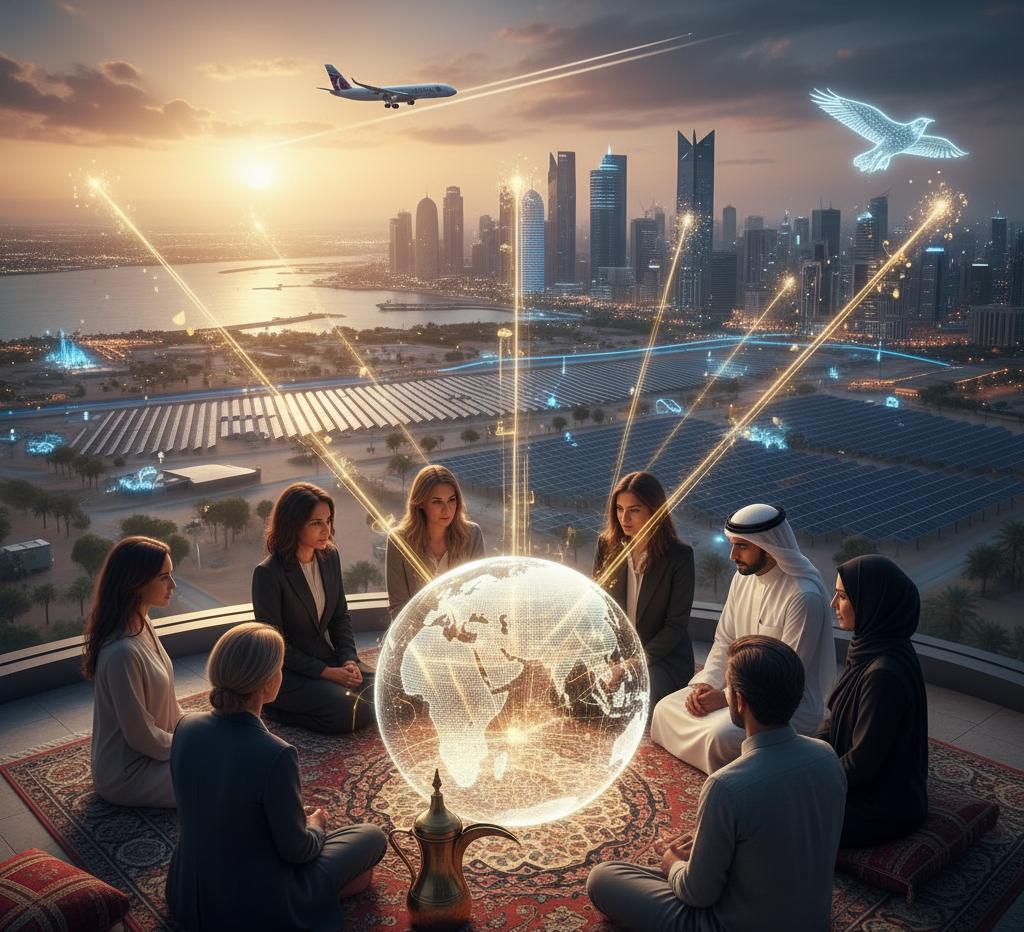
n a rapidly shifting global landscape, where nations are constantly redefining their roles, asserting their influence, and carving out unique identities, Qatar emerges as an emirate of extraordinary contrasts, breathtaking ambition, and profond strategic depth. Often perceived through the singular, sometimes narrow, lens of its vast hydrocarbon wealth or the spectacular staging of global sporting extravaganzas, this seemingly small, arid peninsula in the Arabian Gulf is, in reality, a vibrant, complex crucible. It is a place where the resonant echoes of ancient Bedouin culture and Islamic heritage intertwine seamlessly with a fiercely uncompromising, almost utopian, futuristic vision. Qatar is more than just a pinpoint on a geopolitical map; it is a living, dynamic laboratory experimenting with how a nation can not only survive but thrive while navigating the tumultuous currents of hyper-modernity, all without relinquishing its foundational soul. In doing so, it adeptly functions as a crucial cultural, economic, and diplomatic bridge, connecting the historical East with the ever-evolving, digitally interconnected West. To truly explore Qatar is to immerse oneself in a multifaceted narrative rich with themes of evolving national identity, audacious sustainability initiatives, groundbreaking urban innovation, and the relentless, deliberate pursuit of a unique, influential place on the 21st-century global stage.
I. An Evolving Identity: From Pearling Depths to Energy Apex to Knowledge Horizons – The Genesis of a Modern Nation
The history of Qatar is a compelling, almost cinematic, saga of radical, near-instantaneous, transformation within a single human lifetime. For centuries, prior to the mid-20th century, its meager economy and the very survival of its scattered communities were inextricably tied to the perilous, laborious pursuit of pearl diving—a life of arduous toil under an unforgiving desert sun and a capricious sea, where fortunes were made and lost on the whim of nature. The serendipitous discovery and subsequent explosive development of its colossal oil and, more significantly, the world’s third-largest natural gas reserves in the mid-20th century, catapulted the nascent nation from relative obscurity into an era of unprecedented, almost unimaginable, prosperity. This newfound wealth swiftly transformed the stark, arid desert landscape into a dazzling, futuristic mosaic of shimmering skyscrapers, cutting-edge infrastructure, and sprawling urban developments that defied the very notion of their desert origins.
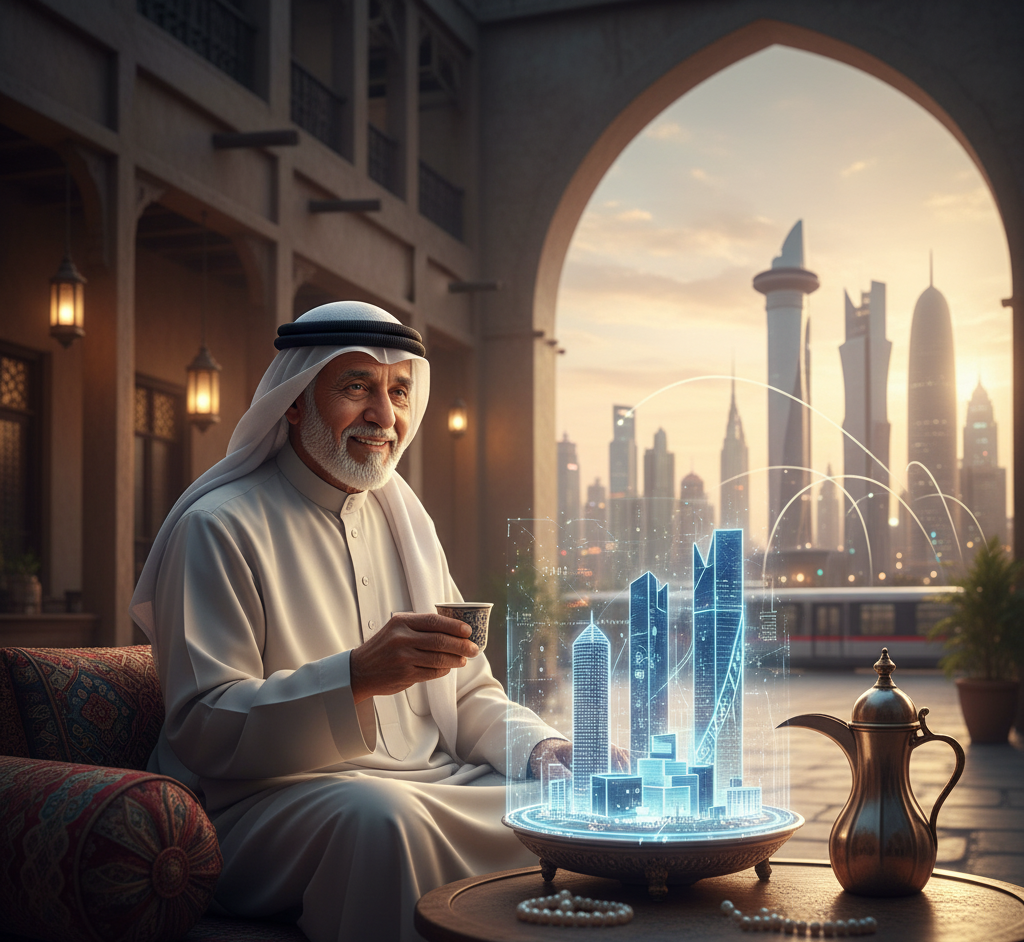
However, unlike some resource-rich nations that might have succumbed to the alluring complacency of petro-dollars, Qatar’s visionary leadership, driven by astute foresight and a deep understanding of geopolitical volatility, embarked upon an aggressive, meticulously articulated strategy of economic diversification. This strategic roadmap, meticulously outlined in its ambitious Qatar National Vision 2030, is far more than a mere economic blueprint; it is a comprehensive philosophy of holistic national development that aims to create a sustainable future for generations beyond the finite lifespan of its hydrocarbon wealth. The staggering, sustained investment in Education City—a sprawling, purpose-built global hub of learning and research, hosting satellite campuses of prestigious international universities (like Georgetown, Carnegie Mellon, Northwestern, and Weill Cornell Medicine) and pioneering research institutions (such as Qatar Science & Technology Park)—stands as a powerful testament to a profound national commitment. This commitment explicitly seeks to transition the nation’s economic dependency from a carbon-based resource model to a vibrant, resilient, and diversified knowledge-based economy, fostering indigenous talent and attracting global expertise. Simultaneously, Qatar has undertaken an equally monumental effort to preserve, celebrate, and dynamically reinterpret its rich, indigenous cultural heritage. World-class cultural institutions like the Museum of Islamic Art, with its iconic, geometric architectural purity (designed by I.M. Pei), and the sprawling National Museum of Qatar, an architectural marvel designed by Jean Nouvel to fluidly resemble a desert rose, are not merely passive tourist attractions. They are vital, living cultural pillars, meticulously curated to safeguard, narrate, and evolve a compelling national identity that profoundly honors its deep historical roots while boldly, confidently embracing a dynamically unfolding future. This intricate duality—where the evocative aroma of strong Arabic coffee in the labyrinthine traditional souqs (like Souq Waqif) coexists seamlessly with the sleek, avant-garde architecture of a burgeoning metropolis—forms the vibrant, pulsating, and uniquely complex heart of Qatar’s distinct identity.
II. Architecture as Manifest Ambition: Doha, A Futuristic Crucible of Urbanism, Aesthetics, and Liveability
Doha, the burgeoning capital city, stands as the quintessential embodiment of Qatar’s audacious national ambition, serving as a colossal, open-air architectural laboratory that redefines urban possibilities. Its breathtaking skyline, punctuated by soaring, often sculptural, skyscrapers, are far more than mere utilitarian structures; they are audacious, artistic, and technological statements of intent, collectively shaping an urban panorama that now confidently competes with the most iconic global metropolises from Dubai to Singapore. The National Museum of Qatar, with its interlocking discs and organic flow, fluidly tells the geological, historical, and cultural story of the nation from ancient fossils to modern statehood, its form echoing the organic beauty and formation of the desert rose. The Museum of Islamic Art, a timeless work of minimalist elegance, rises majestically from its artificial island, a serene beacon of intellectual and aesthetic excellence, blending ancient Islamic motifs with uncompromising modernist minimalism and offering panoramic views of the Corniche.
Yet, Qatar’s architectural prowess extends far beyond mere aesthetic grandeur; it is deeply rooted in functional innovation, strategic urban planning, and a commitment to liveability. The city of Lusail, a multi-billion dollar, meticulously planned urban marvel that has risen seemingly from the barren desert, serves as a compelling model of intelligent, integrated urban sustainability and smart city design. It boasts advanced light rail transportation systems, cutting-edge smart infrastructure, and a truly futuristic network designed for unparalleled efficiency, connectivity, and superior liveability. Even the design of its world-class sporting venues, such as the innovative Al Janoub Stadium (inspired by traditional dhow boats) or the reusable Ras Abu Aboud Stadium, pushed boundaries in modular construction and sustainable design. These monumental projects are not solely conceived to impress on a global scale; they are fundamentally designed to create highly livable, exceptionally efficient, technologically advanced, and culturally sensitive spaces for its burgeoning resident population, while simultaneously attracting and retaining global talent, capital, and intellectual curiosity. Doha, in essence, is a continuous, dynamic experiment in how a city can be meticulously planned, engineered, and executed for a future that is concurrently innovative, ecologically sustainable, aesthetically pioneering, and intrinsically human-centric.
III. A Resurgent Global Player: Sport, Diplomacy, and the Art of Strategic Soft Power Projection
Qatar has masterfully leveraged the immense power, global reach, and universal appeal of mega-events to project itself onto the world stage with unparalleled efficacy and strategic foresight. The monumental hosting of the FIFA World Cup 2022 served as a prime example of this meticulously orchestrated strategy. It was notable not just for its breathtaking, state-of-the-art sporting infrastructure and innovative, modular stadium designs (many featuring advanced cooling technologies), but also for its explicit, though sometimes controversial, commitment to making the event culturally inclusive, technologically advanced, and, to the greatest extent possible, ecologically sustainable through carbon offsetting and reuse initiatives. These high-profile mega-events serve a crucial dual purpose: they dramatically showcase the nation’s exceptional organizational capabilities, its logistical prowess, and its unwavering commitment to global excellence, while simultaneously creating invaluable platforms for dialogue, cultural exchange, and mutual understanding that transcend mere athletic spectacle and foster global goodwill.
In parallel, Qatar has assiduously cultivated and consolidated its role as a pivotal, often indispensable, diplomatic actor, frequently punching far above its geographical weight in the intricate geopolitical landscape of the Middle East and beyond. Its foreign policy, often characterized by a pragmatic reliance on impartial mediation, facilitated dialogue, and shrewd conflict resolution, has strategically positioned it as a trusted, often neutral, interlocutor in complex regional crises (such as those in Afghanistan, Darfur, and the Israeli-Palestinian conflict) and international disputes. Furthermore, through its formidable sovereign wealth fund, the Qatar Investment Authority (QIA), the nation strategically invests in leading global companies, critical infrastructure projects, and diverse asset classes worldwide. This not only fuels its diversification strategy but also acquires substantial economic and political influence, promoting long-term financial stability and global interdependence. These concerted, multi-pronged efforts are integral components of a much broader, sophisticated vision that positions Qatar not merely as a passive beneficiary of globalization, but as an active, influential shaper of its evolving trajectory, norms, and diplomatic discourse. This is the sophisticated architecture of soft power, meticulously built, strategically deployed, and deftly wielded on the global chessboard.
IV. Navigating the Crossroads: Challenges, Progressive Reforms, and the Pursuit of an Equitable & Sustainable Future
Despite its remarkable, often breakneck, pace of development and its impressive geopolitical ascendance, Qatar, like any rapidly transforming nation navigating the complexities of modern nation-building, is not without its inherent challenges and has faced considerable, and often legitimate, international scrutiny and criticism. Foremost among these concerns have historically been issues related to the rights, welfare, and working conditions of its vast migrant worker population, a cornerstone of its rapid infrastructural development, as well as questions surrounding certain social freedoms within the emirate. However, it is crucial, and academically honest, to acknowledge that persistent international pressure, coupled with a discernible and growing internal awareness and commitment to progress, has spurred the Qatari government to implement a series of significant, far-reaching legislative and practical reforms. While the journey towards fully realizing a perfectly equitable and just system is undeniably long, complex, and still very much in progress, these reforms (such as the abolition of the Kafala system, the establishment of minimum wages, and improved labor dispute resolution mechanisms) represent foundational, albeit incremental, steps towards greater accountability, improved standards, and a more humane future for all residents.
The conversation surrounding genuine environmental sustainability, particularly in a nation whose vast wealth has historically been derived from extensive hydrocarbon extraction, presents another enduring and profound paradox. Yet, Qatar confronts this inherent challenge with substantial, forward-looking investments in large-scale solar energy projects (like the Al Kharsaah Solar PV Power Plant), pioneering carbon capture and storage technologies, and innovative ecological urban planning initiatives specifically designed to create greener, more resilient, and truly net-zero cities. The development of sustainable cities like Msheireb Downtown Doha exemplifies this commitment to seamlessly blending traditional Qatari architecture with cutting-edge sustainable design principles, energy efficiency, and smart city technologies.
In conclusion, Qatar stands as a uniquely compelling, multifaceted case study in modern nation-building and strategic foresight—a living testament to how a small state, endowed with immense resources, can not only survive but strategically thrive. It intricate attempts to balance ancient, deeply cherished traditions with the relentless demands of modernity, abundant natural resources with visionary long-term planning, and audacious national ambition with an evolving, critical sense of global responsibility. It is by no means a flawless model, and its path remains complex, dynamic, and under constant international observation and critical analysis. Nevertheless, its unique, audacious trajectory offers invaluable lessons on navigating the profound complexities of globalization, implementing ambitious economic diversification strategies, and meticulously constructing a resilient, forward-looking national identity in a rapidly changing world. Its ongoing journey is a powerful testament to the transformative power of human will, meticulously executed strategic planning, and unwavering national resolve—a potent reminder to critically look beyond facile preconceptions and to strive for a deeper, nuanced understanding of the intricate complexities of a nation that is, quite literally, building its own future before our very eyes, bridge by bridge, skyscraper by skyscraper, and, most importantly, idea by innovative, future-oriented idea.